
When Power Becomes Prejudice: How Djibouti and Somalia Are Weaponizing Their Diplomatic Seats Against Somaliland’s Sovereignty
 By Warda
January 8, 2026
By Warda
January 8, 2026
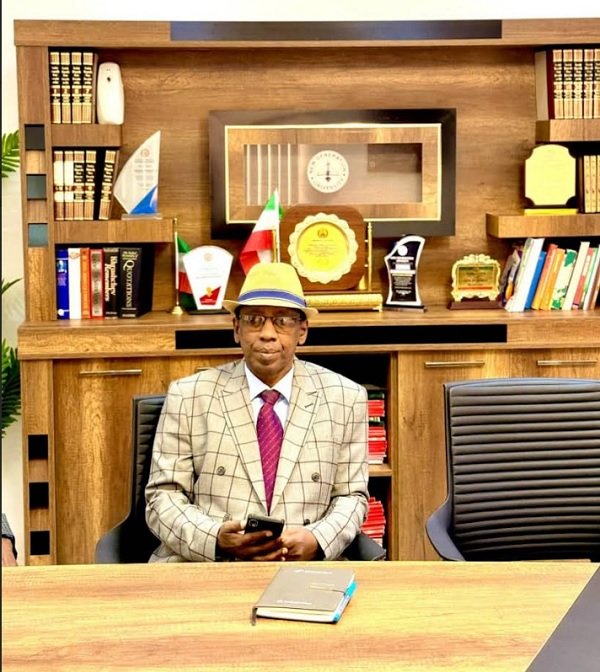
By Abdi Halim M. Musa
Hargeisa, Republic of Somaliland
As Djibouti assumes the Chairmanship of the African Union (AU) and Somalia takes up the rotating presidency of the United Nations Security Council (UNSC), Somaliland finds itself confronting not diplomacy, but a coordinated campaign of diplomatic obstruction.
These developments have been widely celebrated as milestones for the Horn of Africa. Yet for Somaliland, they represent something far more concerning: the strategic misuse of international institutions by actors who have long opposed Somaliland’s independence—not on the basis of law or principle, but through political hostility rooted in outdated ideologies and unresolved historical grievances.
This is not principled diplomacy.
It is obstructionism cloaked in legitimacy.
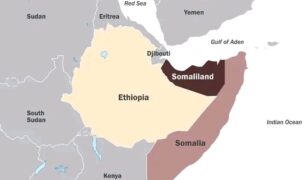
Somaliland, Djibouti, Somalia, the Somali Region of Ethiopia, and Kenya’s Northern Frontier District were once imagined as the five pillars of the “Greater Somalia” project. That vision collapsed under the weight of political reality.
Somaliland—then British Somaliland—was the first Somali territory to gain independence in June 1960. In an act of idealism and Pan-Somali solidarity, it voluntarily united with Italian Somalia to form the Somali Republic.
What followed was not unity, but marginalization.
Not democracy, but dictatorship.
Not equality, but systematic exclusion—culminating in mass atrocities, aerial bombardment of cities, and civil war.
Djibouti, under French administration until 1977, made a different choice. It rejected unification and chose sovereignty. That decision was respected by the international community and by Somalis everywhere including those in Somaliland.
Today, the irony is unmistakable. Djibouti, which once embodied Somali self-determination, now uses its leadership within the African Union not to defend that principle, but to block it—when it comes to Somaliland.
Somalia’s UNSC Presidency: A Platform for Delegitimization
Somalia’s presidency of the UNSC in January 2026 is its most significant diplomatic achievement in decades. Yet it comes at a time when Somalia continues to struggle with the fundamentals of statehood.
After more than thirty years of international intervention, peacekeeping missions, and external assistance, the Somalia government’s authority remains largely confined to only Mogadishu and a limited perimeter beyond it.
Now, with access to the world’s most powerful diplomatic forum, Somalia appears poised not to advance peace or regional stability, but to pursue a long-standing objective:
delegitimizing Somaliland.
Through the language of “territorial integrity” and counterterrorism, Somaliland will be portrayed as a “breakaway region” rather than what it is—a polity that withdrew from a failed and violent union after exhausting all internal remedies.
This is not responsible statecraft.
It is the instrumentalization of global institutions for nationalist ends.
Djibouti’s AU Chairmanship: From Neutrality to Institutional Amnesia
Djibouti’s assumption of the African Union chairmanship is particularly troubling not only because of its political alignment with Mogadishu, but because it disregards the AU’s own institutional findings on Somaliland.
In 2005, the African Union dispatched an official Fact-Finding Mission to Somaliland—a rare and consequential step. The mission’s report reached a clear conclusion: Somaliland’s case is unique, historically grounded, and self-justified, and should not be treated as a precedent for secession elsewhere in Africa.
the report explicitly acknowledged that Somaliland’s withdrawal from the union with Somalia was rooted in the voluntary nature of that union, its subsequent collapse, and the absence of any credible mechanism for redress within the Somali state. It urged the AU to develop a special, tailored approach to Somaliland, rather than forcing it into frameworks designed for internal rebellions.
This was not an external opinion.
It was an African assessment of an African reality.
Yet nearly two decades later, under Djibouti’s leadership—particularly through Foreign Minister Mahmoud Ali Youssouf, now serving as AU Chair—this landmark report has been effectively sidelined. Instead of advancing the AU’s own recommendation for engagement, the institution has reverted to silence, deferral, and political convenience.
This is not neutrality.
It is institutional amnesia.
By ignoring its own fact-finding mission, the African Union undermines its credibility as a principled continental body and signals that political alliances matter more than evidence.
Somaliland’s Case: Law, Practice, and Performance
Somaliland’s claim to statehood is not an act of rebellion.
It is an act of restoration.
Under international law, most notably the Montevideo Convention, Somaliland clearly qualifies as a state: it possesses a defined territory, a permanent population, an effective government, and the capacity to engage in foreign relations.
Beyond theory, Somaliland has demonstrated performance. It has conducted multiple democratic elections, ensured peaceful transfers of power, maintained internal security, and contributed to regional stability without international recognition, but in alignment with international standards.
In contrast to the chronic instability of Somalia, Somaliland has built governance from the ground up.
Israel’s recent recognition of Somaliland represents a bold and principled acknowledgment of reality on the ground. It affirms a simple truth: recognition is not a gift. It is an acknowledgment of fact.
Other states should now follow.
The international community must not allow the African Union or the United Nations Security Council to be repurposed as tools for silencing legitimate political aspirations. It must:
- Recognize the Risk: Djibouti and Somalia are not neutral actors. Their leadership roles are being used to block dialogue, not foster it.
- Engage Somaliland Directly: Open diplomatic channels with Hargeisa, establish missions, and pursue bilateral cooperation.
- Reward Democratic Legitimacy: Stability, peace, and democratic governance must matter more than inherited claims of sovereignty.
- Follow Israel’s Example: Delay only emboldens those who seek to erase Somaliland’s voice.
In conclusion, Somaliland is not asking for charity.
It is demanding justice.
For more than three decades, it has proven its capacity to govern, its commitment to peace, and its right to exist. The question before the international community is not whether Somaliland qualifies for recognition—but whether global institutions have the courage to act on principle rather than convenience.
The African Union and the United Nations Security Council must remember: legitimacy rests on fairness. When power becomes prejudice, institutions lose the moral authority they claim to uphold.
Somaliland’s recognition is not a matter of if—but when.
And that “when” depends on whether the world chooses courage over complacency, justice over inertia, and reality over denial.