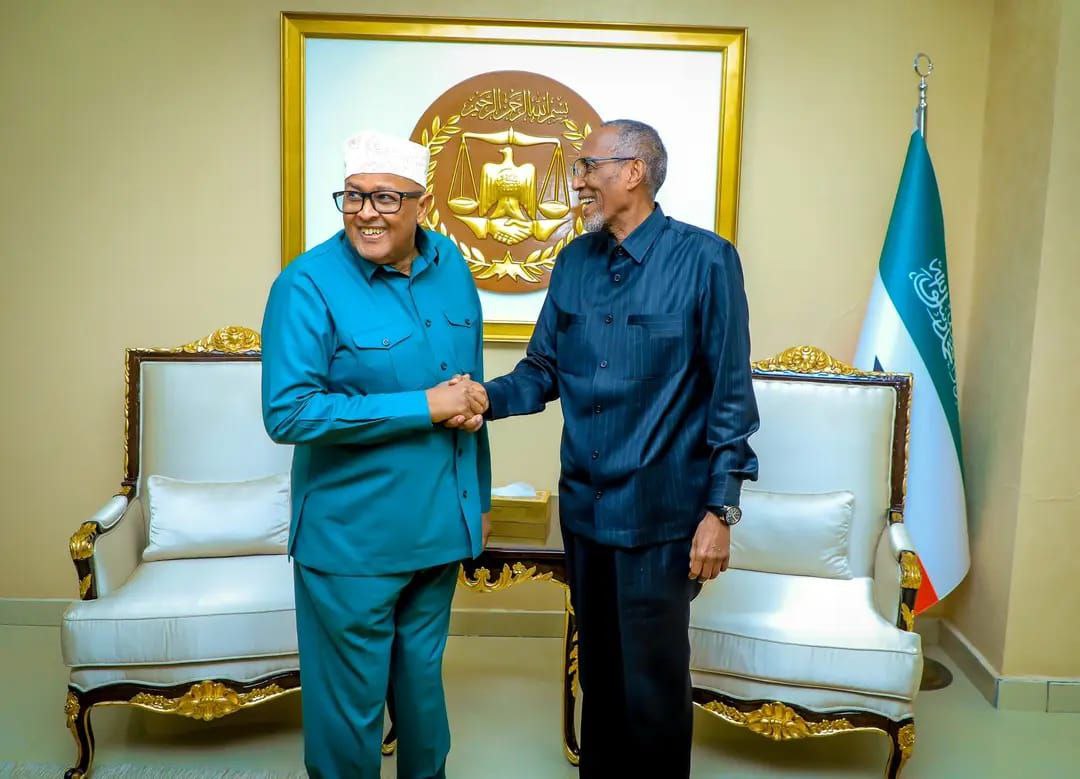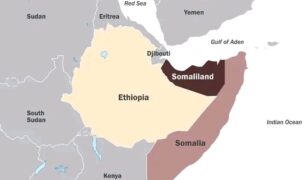

Democracy at the Gate of the Red Sea: Somaliland’s Case for RecognitionSomaliland has built a democracy in one of the world’s most unstable regions, yet the international community continues to deny it recognition. With Berbera sitting at the entrance to the Red Sea and relations already established with Taiwan, Somaliland demonstrates both sovereign capacity and strategic indispensability. Recognition is not a favor but an overdue acknowledgement that aligns with Western values and interests.Democracy was never expected to survive at the gate of the Red Sea. Yet Somaliland has built one — and sustained it against the odds.. For decades, Somalia’s federal government has claimed to be the sole authority from the Gulf of Aden to the Indian Ocean, dismissing Somaliland as a mere “breakaway” region. The reality is very different: Mogadishu has become a failed experiment in state-building, while Somaliland has emerged as one of Africa’s most stable, democratic, and strategically significant polities. Its decision to establish full diplomatic relations with Taiwan — exchanging embassies — underscores this reality. Beyond Taiwan, Somaliland maintains liaison and representative offices in Kenya, Ethiopia, the United Arab Emirates, the United Kingdom, and the United States. These channels ensure Somaliland’s voice is heard, even in the absence of recognition. Somaliland is already behaving like a sovereign state and shaping global alignments. Recognition, therefore, is not a gift to be granted. It is an overdue acknowledgement of fact — and a strategic necessity.The Horn of Africa has long been defined by instability, but Berbera tells another story: a strategic port rising in importance at one of the world’s busiest maritime corridors. How the West responds to Berbera’s emergence will reveal much about its ability to compete in a multipolar world. After three decades of aid, Somalia remains unable to provide reliable governance. Billions spent on security reform and institution-building have yielded little. Mogadishu cannot project authority beyond fortified sandbags. Its politics are dominated by corrupt elites who enrich themselves while ordinary citizens are excluded. International partners, meanwhile, find themselves propping up a state that consumes resources but delivers little in return. Mogadishu has become a liability to be managed, not a foundation to build upon.Somaliland, by contrast, offers the rarest of African stories: a functioning state created and sustained from within. It declared independence in 1991, but its sovereign credentials stretch back further — it was briefly recognized as an independent state in June 1960, before voluntarily uniting with Somalia days later. Since reclaiming independence, Somaliland has organized multiple free elections, overseen peaceful transfers of power, and maintained institutions without foreign troops or endless subsidies. Its people have repeatedly affirmed their will to remain self-governing, with turnout in the 2024 elections surpassing 80 percent — among the highest levels of democratic participation anywhere in Africa — with 68 percent voting for change and new leadership.Berbera, sitting at the entrance of the Bab al-Mandab Strait, gives Somaliland unmatched geostrategic weight. Whoever influences Berbera influences the Red Sea — and with it, one of the world’s vital arteries of trade. Somaliland also possesses untapped reserves of rare earth minerals essential for Western technology supply chains. At a moment when China dominates access to these resources, Somaliland’s potential is both economic and strategic. And unlike southern Somalia, it has denied sanctuary to extremists and piracy, providing stability in a region where insecurity is the norm.Yet the international community has allowed Mogadishu’s narrative to dominate, treating Somaliland’s claim to recognition as a threat to Somalia’s fragile experiment. This is a distortion. Recognition of Somaliland does not fragment Somalia; it merely acknowledges a reality that has existed since 1991. Somaliland, unlike Mogadishu, does not hoard wealth and opportunity for a narrow elite. It offers a democratic model where every community has a stake — a reality demonstrated each time Somaliland’s citizens turn out in record numbers to vote.Failure to recognize Somaliland is not neutrality. It is an active harm. It punishes people who have chosen democracy and self-reliance. It denies the West a partner aligned with its strategic interests. And it empowers those who would prefer the Horn remain unstable and dependent. Each year of hesitation leaves space for others. Gulf powers pursue influence through ports and finance. China and Russia explore footholds across the region. Mogadishu, unstable and aid-dependent, is courted precisely because it is pliable. If the West continues to look away, it risks losing Somaliland — a partner it cannot afford to lose.The question is no longer whether Somaliland can behave as a state. It already does. Its democracy, its rule of law, and its sovereign diplomacy prove that recognition is overdue. Its full diplomatic exchange with Taiwan further highlights that Somaliland is not only acting as a state but is shaping international alignments in real time. To deny its rightful place among nations is both unjust and strategically reckless. Whoever controls Berbera does not merely influence Somaliland’s fortunes; they shape the future security of the Red Sea itself. The world should act accordingly.
 By Warda
August 31, 2025
By Warda
August 31, 2025
0 Comments